DJI Mini 5 Pro & DJI Mini 3 Pro share many similarities, but there are also important differences, such as quality, performance, features, design, and connectivity. If you want the best one between them, I Would recommend the DJI Mini 5 Pro rather than the DJI Mini 3 Pro.
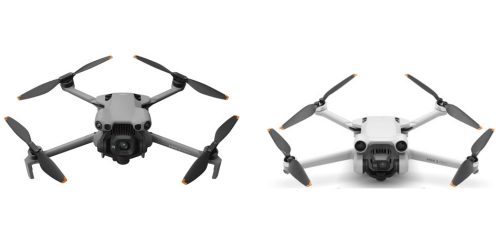
Why Do I Recommend The DJI Mini 5 Pro?
- The DJI Mini 5 Pro features a 1-inch CMOS camera sensor for capturing more light and producing clearer aerial photos with improved dynamic range during sunrise and sunset shooting, whereas the DJI Mini 3 Pro uses a smaller 1/1.3-inch CMOS sensor.
- DJI Mini 5 Pro supports 4K video recording at 120fps for creating smoother slow-motion footage and capturing fast-moving subjects such as vehicles or sports with higher frame detail, while the DJI Mini 3 Pro supports 4K recording only up to 60fps.
- It comes with DJI O4+ video transmission to maintain a stronger signal and a clearer live video feed when flying at long distances or in areas with wireless interference, whereas the DJI Mini 3 Pro uses the older DJI O3 transmission system.
- The DJI Mini 5 Pro features a 20 km maximum transmission distance for maintaining stable remote control and video monitoring during long-range aerial filming, while the DJI Mini 3 Pro has a maximum 12 km transmission range.
- DJI Mini 5 Pro supports omnidirectional obstacle sensing with LiDAR for detecting obstacles in multiple directions and improving flight safety when navigating complex environments, while the DJI Mini 3 Pro uses tri-directional obstacle sensors only.
- It comes with 42 GB built-in internal storage for recording photos and videos even when a microSD card is not inserted during travel or quick flights, whereas the DJI Mini 3 Pro includes only 1.2 GB internal storage.
- The DJI Mini 5 Pro supports live video transmission at 1080p 60fps for delivering a smoother real-time monitoring experience on the controller screen while framing shots, while the DJI Mini 3 Pro streams live video at 1080p 30fps.
- DJI Mini 5 Pro offers up to 52 minutes of flight time for capturing longer aerial sequences without frequent landings and battery changes, whereas the DJI Mini 3 Pro provides about 47 minutes of flight time with the extended battery.
Maybe the DJI Mini 3 Pro can make you comfortable because it’s a little bit cheaper than the DJI Mini 5 Pro. But you have to compromise all the above-mentioned features. Now the Decision is Yours. I hope it was helpful to choose the right one.
Side-by-Side Comparison
| Feature | DJI Mini 5 Pro | DJI Mini 3 Pro |
| Camera sensor size | 1-inch CMOS | 1/1.3-inch CMOS |
| Effective photo resolution | 50 MP | 48 MP |
| Video resolution maximum | 4K 120fps | 4K 60fps |
| Slow motion | 1080p 240fps | 1080p 120fps |
| Video transmission system | DJI O4+ | DJI O3 |
| Maximum transmission distance | 20 km | 12 km |
| Maximum flight time (standard battery) | 36 minutes | 34 minutes |
| Maximum flight time (extended battery) | 52 minutes | 47 minutes |
| Internal storage | 42 GB | 1.2 GB |
| Obstacle sensing system | Omnidirectional + LiDAR sensor | Tri-directional vision sensors |
| Gimbal rotation range | 225° rotation | 90° vertical rotation |
| Folded dimensions | 157 × 95 × 68 mm | 145 × 90 × 62 mm |
| Unfolded dimensions | 255 × 181 × 91 mm | 171 × 245 × 62 mm |
| Max video bitrate | 200 Mbps | 150 Mbps |
| Live video transmission quality | 1080p 60fps | 1080p 30fps |
| Wireless connectivity | Wi-Fi 6 | Wi-Fi 5 |
| ActiveTrack version | ActiveTrack 6.0 | ActiveTrack 4.0 |
| Return-to-home navigation | GNSS + vision positioning | GNSS positioning |
| Maximum ascent speed | 6 m/s | 5 m/s |
| Maximum wind resistance | 12 m/s | 10.7 m/s |
| Price | Check DJI Mini 5 Pro Price | Check DJI Mini 3 Pro Price |
What Common Both Can Do?
- Under-250 g class drone: Both drones belong to the sub-250-gram category, which is designed to simplify drone regulations in many regions. This lightweight class allows pilots to fly recreationally with fewer licensing requirements compared with heavier drones.
- Foldable drone design: Both models use a foldable airframe that allows the arms to collapse for transport. This design makes the drones easier to store in small bags and improves portability for travel and outdoor shooting.
- 3-axis mechanical gimbal: Each drone uses a 3-axis stabilized camera gimbal to keep footage smooth and level. The gimbal compensates for drone movement, which helps maintain stable cinematic video even in windy conditions.
- Vertical shooting support: Both drones support vertical camera orientation for social media content creation. This feature allows creators to capture portrait-format video and photos that are optimized for platforms such as Instagram Reels and TikTok.
- 4K video recording: Both drones can record video at 4K resolution. This resolution provides high-detail footage that is suitable for professional editing, YouTube production, and cinematic aerial content.
- 10-bit color video: Both models support 10-bit color recording for expanded color depth. This capability allows creators to capture more color information, which helps when color grading footage during post-production.
- HDR video recording: Each drone supports HDR video modes for improved contrast and balanced highlights and shadows. HDR helps preserve details in both bright skies and darker landscapes during aerial filming.
- D-Cinelike color profile: Both drones include the D-Cinelike color profile for advanced video editing. This flatter color profile preserves more visual information so editors can adjust color tones and contrast more precisely.
- RAW photo format (DNG): Both drones support DNG RAW photography. RAW images retain uncompressed sensor data, which gives photographers greater flexibility when adjusting exposure, white balance, and color during editing.
- Panorama photo modes: Each drone includes automated panorama capture modes such as sphere, wide-angle, and 180-degree panoramas. These modes stitch multiple images together automatically to create large aerial landscape photos.
- QuickShots automated flight modes: Both models feature DJI QuickShots modes that automate cinematic camera movements. These modes allow users to capture professional-style drone shots such as Rocket, Circle, and Helix with minimal piloting experience.
- FocusTrack subject tracking: Both drones include subject-tracking capabilities through DJI’s FocusTrack system. This technology allows the drone to automatically follow a moving subject such as a person, vehicle, or cyclist while maintaining framing.
- GPS / GNSS positioning: Each drone uses GNSS satellite positioning systems for navigation and stability. This positioning helps the drone maintain precise hovering and accurate flight path control during autonomous functions.
- Return-to-Home safety function: Both drones include an automatic Return-to-Home feature that activates when the battery is low or the signal is lost. This safety system helps prevent flyaways by guiding the drone back to its launch point.
- DJI Fly mobile app control: Both models are controlled through the DJI Fly mobile application. The app provides live video transmission, flight telemetry, camera settings, and access to intelligent flight features.
- microSD card storage support: Each drone supports recording to microSD cards for storing photos and video footage. This removable storage makes it easy to transfer media files to computers or editing devices.
- RC controller compatibility: Both drones can be paired with DJI remote controllers such as the RC-N series or DJI RC controllers. These controllers provide physical flight controls and integrated display options for monitoring live footage.
- Intelligent flight battery system: Both models use DJI Intelligent Flight Batteries with built-in monitoring electronics. These batteries track charge levels, temperature, and power usage to help maintain safe and efficient flight performance.
Common Features
| Feature | DJI Mini 5 Pro | DJI Mini 3 Pro |
| Under-250 g class drone | Yes | Yes |
| Foldable drone design | Yes | Yes |
| 3-axis mechanical gimbal | Yes | Yes |
| Vertical shooting support | Yes | Yes |
| 4K video recording | Yes | Yes |
| 10-bit color video | Yes | Yes |
| HDR video recording | Yes | Yes |
| D-Cinelike color profile | Yes | Yes |
| RAW photo format (DNG) | Yes | Yes |
| Panorama photo modes | Yes | Yes |
| QuickShots automated flight modes | Yes | Yes |
| FocusTrack subject tracking | Yes | Yes |
| GPS / GNSS positioning | Yes | Yes |
| Return-to-Home safety function | Yes | Yes |
| DJI Fly mobile app control | Yes | Yes |
| microSD card storage support | Yes | Yes |
| RC controller compatibility | Yes | Yes |
| Intelligent flight battery system | Yes | Yes |
| Price | Check DJI Mini 5 Pro Price | Check DJI Mini 3 Pro Price |
FAQ
Do both DJI Mini 5 Pro and DJI Mini 3 Pro weigh under 250 grams? Can DJI Mini 5 Pro and DJI Mini 3 Pro record 4K video? Do DJI Mini 5 Pro and DJI Mini 3 Pro support vertical shooting? What type of camera stabilization do DJI Mini 5 Pro and DJI Mini 3 Pro use? Do DJI Mini 5 Pro and DJI Mini 3 Pro support RAW photo capture? Are DJI Mini 5 Pro and DJI Mini 3 Pro suitable for beginners? Do DJI Mini 5 Pro and DJI Mini 3 Pro support automated flight modes? Can both drones track moving subjects automatically? Do DJI Mini 5 Pro and DJI Mini 3 Pro use GPS positioning for flight stability? Do DJI Mini 5 Pro and DJI Mini 3 Pro include a Return-to-Home safety feature? Can DJI Mini 5 Pro and DJI Mini 3 Pro store footage on microSD cards? Are DJI Mini 5 Pro and DJI Mini 3 Pro compatible with DJI remote controllers? Do DJI Mini 5 Pro and DJI Mini 3 Pro support HDR video recording? Are DJI Mini 5 Pro and DJI Mini 3 Pro portable for travel? |