DJI Mini 5 Pro & DJI Flip share many similarities, but there are also important differences, such as quality, performance, features, design, and connectivity. If you want the best one between them, I Would recommend the DJI Mini 5 Pro rather than the DJI Flip.
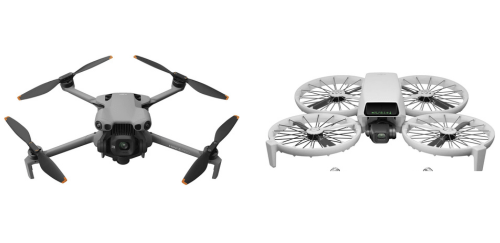
Why Do I Recommend The DJI Mini 5 Pro?
- The DJI Mini 5 Pro features a 1-inch CMOS camera sensor for capturing higher light intake and more detailed aerial photos in challenging lighting conditions, whereas the DJI Flip features a 1/1.3-inch CMOS sensor.
- DJI Mini 5 Pro supports 4K video recording at up to 120 frames per second for producing smoother slow-motion footage and cinematic motion sequences during aerial filming, while the DJI Flip supports 4K video recording at up to 60 frames per second.
- It includes omnidirectional obstacle sensing with LiDAR assistance for detecting obstacles in multiple directions and helping pilots navigate complex environments safely, whereas the DJI Flip includes forward and downward obstacle sensors.
- The DJI Mini 5 Pro comes with the DJI O4+ transmission system for maintaining stable video signals and clearer live view feeds over longer flight distances, while the DJI Flip uses the DJI O4 transmission system.
- DJI Mini 5 Pro supports up to 20 kilometers video transmission distance to capture aerial footage across wider landscapes without signal interruption, while the DJI Flip supports a maximum transmission distance of about 13 kilometers.
- It features approximately 42 GB of built-in internal storage for saving photos and videos directly on the drone without requiring a memory card, whereas the DJI Flip relies on external microSD storage only.
- The DJI Mini 5 Pro supports 6000 meters takeoff altitude for flying and capturing footage in higher elevation environments such as mountainous regions, while the DJI Flip supports 3000 meters takeoff altitude.
- DJI Mini 5 Pro features 19 meters per second horizontal flight speed for tracking fast-moving subjects such as vehicles or cyclists more effectively, whereas the DJI Flip reaches a maximum horizontal speed of about 16 meters per second.
Maybe the DJI Flip can make you comfortable because it’s a little bit cheaper than the DJI Mini 5 Pro. But you have to compromise all the above-mentioned features. Now the Decision is Yours. I hope it was helpful to choose the right one.
Side-by-Side Comparison
| Feature | DJI Mini 5 Pro | DJI Flip |
| Camera Sensor Size | 1-inch CMOS | 1/1.3-inch CMOS |
| Photo Resolution | 50 MP | 48 MP |
| Video Frame Rate | 4K 120 fps | 4K 60 fps |
| HDR Video | 4K HDR 120 fps | 4K HDR 60 fps |
| Slow Motion | 1080p 240 fps | 4K 100 fps |
| Lens Aperture | f/1.8 | f/1.7 |
| Dynamic Range | 14 stops | 12 stops |
| Internal Storage | 42 GB | 0 GB |
| Video Transmission System | O4+ | DJI O4 |
| Maximum Transmission Range | 20 km | 13 km |
| Maximum Flight Time | 36 min | 31 min |
| Maximum Flight Time (Extended Battery) | 52 min | N/A |
| Obstacle Sensors | Omnidirectional + LiDAR | Forward + Downward |
| Gimbal Rotation Range | 225° roll rotation | Standard 3-axis range |
| Upward Gimbal Tilt | 55° | 30° |
| Max Video Bitrate | 120 Mbps | 100 Mbps |
| GNSS System | GPS + Galileo + BeiDou | GPS + Galileo |
| Maximum Ascent Speed | 5.5 m/s | 5 m/s |
| Maximum Horizontal Speed | 19 m/s | 16 m/s |
| Maximum Takeoff Altitude | 6000 m | 3000 m |
| Propeller Design | Standard foldable | Full-coverage propeller guard |
| Price | Check DJI Mini 5 Pro Price | Check DJI Flip Price |
What Common Both Can Do?
- 4K Video Recording: Both drones support 4K video capture, enabling users to record high-resolution aerial footage suitable for editing, publishing, or professional use. This capability allows creators to produce detailed footage with strong clarity for travel videos, cinematic scenes, and social media content.
- 3-Axis Mechanical Gimbal: Each drone uses a 3-axis mechanical gimbal to stabilize the camera during flight. This hardware stabilization reduces vibration and unwanted motion, resulting in smooth and professional-looking aerial footage.
- JPEG Photo Format: Both drones can capture images in JPEG format for quick sharing and storage efficiency. JPEG photos are widely compatible with mobile devices, editing software, and online platforms.
- DNG RAW Photo Support: Each drone supports DNG RAW photography, allowing photographers to capture images with minimal compression and maximum image data. RAW files provide more flexibility when adjusting exposure, color, and dynamic range during editing.
- HDR Photo Mode: Both drones include HDR photo capability to capture scenes with varied lighting conditions. HDR combines multiple exposures to retain detail in highlights and shadows, improving overall image balance.
- QuickShots Automated Flight Modes: Both drones feature automated QuickShots flight modes that allow the drone to perform preset cinematic movements around a subject. These modes simplify the process of capturing professional-looking aerial shots without manual piloting.
- ActiveTrack Subject Tracking: Each model includes ActiveTrack technology that allows the drone to follow a selected subject automatically. This feature helps capture dynamic footage of moving subjects such as cyclists, vehicles, or people.
- Return-to-Home Function: Both drones support automatic return-to-home functionality for safer operation. When battery levels are low or signal connection is lost, the drone can navigate back to its takeoff point automatically.
- Downward Vision Sensors: Each drone includes downward sensors to assist with precise hovering and landing. These sensors help maintain stable positioning when flying close to the ground.
- GPS Positioning: Both drones use satellite positioning systems to maintain stable flight and accurate location tracking. GPS support also enables advanced flight features such as automated return-to-home and waypoint navigation.
- DJI Fly Mobile App Control: Both drones operate through the DJI Fly mobile application. This app provides access to camera settings, flight telemetry, automated shooting modes, and firmware updates.
- Remote Controller Compatibility: Each drone can connect to compatible DJI remote controllers for manual flight control. The controller allows pilots to manage flight direction, camera angles, and recording functions more precisely.
- MicroSD Card Storage: Both drones support microSD memory cards for storing photos and videos. This allows users to expand storage capacity and easily transfer footage to computers or editing devices.
- Lithium-Polymer Intelligent Flight Battery: Each drone uses an intelligent lithium-polymer battery designed for aerial flight performance. These batteries include integrated safety electronics that manage charging, temperature, and power distribution.
- Foldable Drone Design: Both models use a foldable design that allows arms and propellers to collapse for transport. This compact form factor improves portability for travel and outdoor shooting sessions.
- Automatic Takeoff and Landing: Each drone includes automated takeoff and landing commands. This feature helps beginner pilots launch and land safely without requiring advanced manual control skills.
- Panorama Shooting Modes: Both drones support panoramic photo modes that stitch multiple images together into wide aerial scenes. This allows users to capture landscapes and large environments in a single expansive image.
- Smartphone Live View Streaming: Both drones transmit a live camera feed to the connected smartphone or controller screen. This real-time view helps pilots frame shots accurately and monitor flight conditions during recording.
Common Features
| Feature | DJI Mini 5 Pro | DJI Flip |
| 4K Video Recording | Yes | Yes |
| 3-Axis Mechanical Gimbal | Yes | Yes |
| JPEG Photo Format | Yes | Yes |
| DNG RAW Photo Support | Yes | Yes |
| HDR Photo Mode | Yes | Yes |
| QuickShots Automated Flight Modes | Yes | Yes |
| ActiveTrack Subject Tracking | Yes | Yes |
| Return-to-Home Function | Yes | Yes |
| Downward Vision Sensors | Yes | Yes |
| GPS Positioning | Yes | Yes |
| DJI Fly Mobile App Control | Yes | Yes |
| Remote Controller Compatibility | Yes | Yes |
| MicroSD Card Storage | Yes | Yes |
| Lithium-Polymer Intelligent Flight Battery | Yes | Yes |
| Foldable Drone Design | Yes | Yes |
| Automatic Takeoff and Landing | Yes | Yes |
| Panorama Shooting Modes | Yes | Yes |
| Smartphone Live View Streaming | Yes | Yes |
| Price | Check DJI Mini 5 Pro Price | Check DJI Flip Price |
FAQ
Do DJI Mini 5 Pro and DJI Flip both record 4K video?
Yes, both drones support 4K video recording. This allows users to capture high-resolution aerial footage suitable for editing, sharing online, or producing professional-quality content.
Are both drones compatible with the DJI Fly mobile application?
Both drones use the DJI Fly app for flight control, camera settings, firmware updates, and flight data monitoring. The app also provides features like QuickShots, automated flight modes, and real-time video transmission.
Do DJI Mini 5 Pro and DJI Flip support RAW photography?
Both drones support RAW photo capture using the DNG format. RAW images retain more image data compared to compressed formats, allowing photographers to adjust exposure, color balance, and details during post-processing.
Do the two drones include subject tracking features?
Yes, both drones support subject tracking through DJI’s intelligent flight technology. This allows the drone to automatically follow a selected subject such as a person, vehicle, or object while maintaining stable framing.
Are the drones equipped with a mechanical gimbal?
Both DJI Mini 5 Pro and DJI Flip use a 3-axis mechanical gimbal. This system stabilizes the camera during flight and helps reduce vibrations, resulting in smoother aerial video and clearer photos.
Can both drones perform automated cinematic flight shots?
Yes, both drones include automated flight modes such as QuickShots. These preset flight patterns allow the drone to capture cinematic shots like orbiting, dronie, rocket, and helix movements without requiring advanced piloting skills.
Do DJI Mini 5 Pro and DJI Flip have return-to-home functionality?
Both drones include an automatic return-to-home feature. This safety function activates when the battery level is low, the signal is lost, or the pilot manually triggers the return command.
Are both drones portable for travel?
Yes, both models are designed to be compact and portable. Their foldable arm design allows them to be stored easily in a small carrying bag or backpack, making them convenient for travel and outdoor shooting.
Do both drones support microSD card storage?
Both drones support microSD cards for storing photos and videos. This allows users to expand storage capacity and easily transfer captured footage to computers or editing devices.
Can beginners fly DJI Mini 5 Pro and DJI Flip easily?
Both drones are designed to be user-friendly with assisted flight systems and automated controls. However, DJI Flip is generally more focused on beginner pilots, while DJI Mini 5 Pro includes additional advanced features aimed at enthusiasts and experienced users.
Do both drones include GPS positioning systems?
Yes, both drones use satellite positioning systems to stabilize flight and maintain precise hovering. GPS also enables features like return-to-home navigation and accurate location tracking.
Do the drones provide live camera streaming during flight?
Both drones transmit a real-time video feed to the connected smartphone or remote controller display. This live view allows pilots to frame shots accurately and monitor the drone’s camera while recording.
Can both drones capture panoramic photos?
Yes, both drones support panoramic shooting modes. These modes automatically capture multiple images and combine them into a single wide-angle aerial photo.
Do DJI Mini 5 Pro and DJI Flip support automatic takeoff and landing?
Both drones include automated takeoff and landing functions. This feature simplifies the launch and landing process, helping pilots operate the drone safely even with limited flying experience.