JBL Tour Pro 3 & JBL Tour Pro 2 share many similarities, but there are also important differences, such as quality, performance, features, design, and connectivity. If you want the best one between them, I Would recommend the JBL Tour Pro 3 rather than the JBL Tour Pro 2.
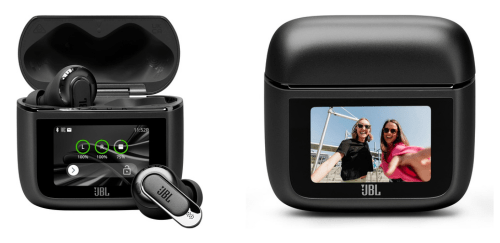
Why Do I Recommend The JBL Tour Pro 3?
- The JBL Tour Pro 3 features a dual driver system (10.2 mm dynamic + balanced armature) for more detailed sound separation and clearer high-frequency reproduction, whereas the JBL Tour Pro 2 uses a single 10 mm dynamic driver.
- JBL Tour Pro 3 supports LDAC codec for higher bitrate wireless audio transmission and improved sound detail during streaming, while the JBL Tour Pro 2 supports SBC and AAC codecs.
- It includes JBL Spatial 360 with head tracking for a more immersive and directionally accurate listening experience during movies and music playback, whereas the JBL Tour Pro 2 does not include spatial audio.
- The JBL Tour Pro 3 has Adaptive ANC 2.0 for more precise real-time noise adjustment based on surroundings, while the JBL Tour Pro 2 uses standard Adaptive ANC.
- JBL Tour Pro 3 comes with a smart charging case that includes USB-C and 3.5 mm audio input for transmitting audio from non-Bluetooth sources like airplanes and TVs, whereas the JBL Tour Pro 2 case does not support audio transmission.
- It supports Auracast broadcast audio for connecting to shared public or multi-device audio streams, whereas the JBL Tour Pro 2 does not support Auracast.
- The JBL Tour Pro 3 uses Bluetooth 5.3 with LE Audio support for more efficient power usage and improved wireless stability in crowded environments, while the JBL Tour Pro 2 uses Bluetooth 5.2 without LE Audio.
- JBL Tour Pro 3 includes six microphones for more accurate voice pickup and enhanced call clarity in noisy environments, whereas the JBL Tour Pro 2 uses fewer microphones.
Maybe the JBL Tour Pro 2 can make you comfortable because it’s a little bit cheaper than the JBL Tour Pro 3. But you have to compromise all the above-mentioned features. Now the Decision is Yours. I hope it was helpful to choose the right one.
Side-by-Side Comparison
| Feature | JBL Tour Pro 3 | JBL Tour Pro 2 |
| Driver Type | Dual | Single 10 mm dynamic |
| Driver Count per Earbud | 2 | 1 |
| Max Frequency Response | 40,000 Hz | 20,000 Hz |
| Hi-Res Audio | Yes | No |
| Audio Codec | LDAC, LC3plus | SBC, AAC |
| Spatial Audio | JBL Spatial 360 + head tracking | Not available |
| Noise Cancellation Version | Adaptive ANC 2.0 | Adaptive ANC |
| Bluetooth Version | 5.3 | 5.2 |
| Auracast Support | Yes | No |
| Charging Case Screen Size | 1.57 inch | 1.45 inch |
| Case Audio Input | USB-C + 3.5 mm analog | Not available |
| Case Function | Audio transmitter | Standard charging case |
| Battery Capacity (Case) | 850 mAh | Not specified |
| Total Battery (ANC OFF) | 44 hours | 40 hours |
| Fast Charge | 10 min = 3 hours | Not specified |
| Number of Microphones | 6 | 4 |
| Smart Case UI Data | ID3 tags, time, notifications | Basic controls |
| Pairing Features | Google Fast Pair, Microsoft Swift Pair | Standard Bluetooth pairing |
| LE Audio Support | Yes | No |
| Bluetooth Profiles | A2DP 1.3, AVRCP 1.6, HFP 1.7 | A2DP, AVRCP, HFP |
| Included Ear Tips | Silicone + memory foam | Silicone only |
| Number of Ear Tip Sizes | 5+ sizes | 3 sizes |
| Price | Check JBL Tour Pro 3 Price | Check JBL Tour Pro 2 Price |
What Common Both Can Do?
- Active Noise Cancellation: Both earbuds feature active noise cancellation technology that reduces external ambient noise during listening. This allows users to focus on music, calls, or media without environmental distractions in different environments.
- Transparency Mode: Both models include a transparency mode that allows outside sound to pass through the earbuds. This makes it easier to stay aware of surroundings without removing the earbuds during use.
- Touch Controls: Each device uses touch-sensitive controls on the earbuds for managing playback, calls, and settings. This provides a convenient and cable-free way to interact with the earbuds directly.
- Wireless Charging: Both earbuds support wireless charging via compatible charging pads. This enables cable-free charging and simplifies daily usage.
- USB-C Charging: Both models use USB-C ports for wired charging. This ensures faster and standardized charging compatibility with modern devices and chargers.
- In-Ear Design: Both earbuds use an in-ear form factor that sits securely inside the ear canal. This design helps improve passive noise isolation and overall audio stability.
- True Wireless Stereo: Both devices are fully wireless with no cables connecting the earbuds. This allows independent left and right channel transmission for a seamless stereo experience.
- Multipoint Connection: Both earbuds support multipoint connectivity, allowing connection to multiple devices simultaneously. This helps users switch between devices like phones and laptops without disconnecting.
- Voice Assistant Support: Each model integrates with voice assistants such as Google Assistant or Siri. This allows hands-free control for tasks like calling, messaging, and media control.
- Ambient Aware Mode: Both earbuds feature Ambient Aware mode that enhances environmental sound levels. This is useful for outdoor usage or situations where awareness is required.
- TalkThru Mode: Both models include TalkThru mode, which lowers music volume and boosts speech frequencies. This allows quick conversations without removing the earbuds.
- IPX5 Water Resistance: Both earbuds are rated IPX5 for water resistance against sweat and light rain. This makes them suitable for workouts and outdoor activities.
- JBL Headphones App Support: Both devices are compatible with the JBL Headphones app for customization and control. Users can adjust settings, firmware, and features through the app.
- EQ Customization: Both earbuds support customizable equalizer settings. This allows users to fine-tune audio output according to personal listening preferences.
- Smart Charging Case: Both models include a smart charging case with integrated controls and display functionality. This adds convenience by allowing users to manage playback and settings directly from the case.
- Built-in Microphones: Both earbuds include multiple microphones for voice pickup and communication. This supports clear calls and voice assistant interaction.
- Call Noise Reduction: Both devices use noise reduction technology during calls to minimize background sounds. This improves voice clarity in different environments.
- Auto Play/Pause: Both earbuds feature automatic play and pause functionality based on wear detection. This helps conserve battery and provides a seamless listening experience.
Common Features
| Feature | JBL Tour Pro 3 | JBL Tour Pro 2 |
| Active Noise Cancellation | Yes | Yes |
| Transparency Mode | Yes | Yes |
| Touch Controls | Yes | Yes |
| Wireless Charging | Yes | Yes |
| USB-C Charging | Yes | Yes |
| In-Ear Design | Yes | Yes |
| True Wireless Stereo | Yes | Yes |
| Multipoint Connection | Yes | Yes |
| Voice Assistant Support | Yes | Yes |
| Ambient Aware Mode | Yes | Yes |
| TalkThru Mode | Yes | Yes |
| IPX5 Water Resistance | Yes | Yes |
| JBL Headphones App Support | Yes | Yes |
| EQ Customization | Yes | Yes |
| Smart Charging Case | Yes | Yes |
| Built-in Microphones | Yes | Yes |
| Call Noise Reduction | Yes | Yes |
| Auto Play/Pause | Yes | Yes |
| Price | Check JBL Tour Pro 3 Price | Check JBL Tour Pro 2 Price |
FAQ
Do both JBL Tour Pro 3 and Tour Pro 2 have active noise cancellation? Is the sound quality noticeably different between the two models? Do both models support spatial audio? Which model has better battery life? Are the charging cases the same on both models? Can both earbuds connect to multiple devices at the same time? Do both models support wireless charging? Is there any difference in Bluetooth connectivity? Do both earbuds support voice assistants? Are both earbuds suitable for workouts and outdoor use? Do both models have customizable sound settings? Is call quality similar on both devices? Do both earbuds automatically pause when removed from the ear? Which model is more future-proof? |