DJI Mini 5 Pro & Skyrover X1 share many similarities, but there are also important differences, such as quality, performance, features, design, and connectivity. If you want the best one between them, I Would recommend the DJI Mini 5 Pro rather than the Skyrover X1.
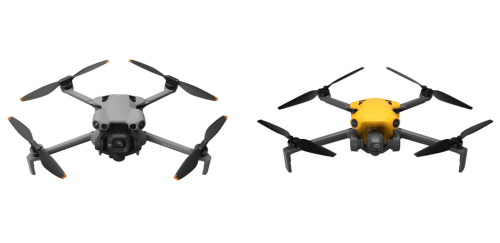
Why Do I Recommend The DJI Mini 5 Pro?
- The DJI Mini 5 Pro features a 1-inch CMOS camera sensor for capturing higher dynamic range and more detailed aerial photos in complex lighting conditions, while the Skyrover X1 uses a 1/1.32-inch CMOS sensor.
- DJI Mini 5 Pro supports 4K video recording at 120 fps for smoother slow-motion footage and more flexibility when editing high-frame-rate aerial videos, whereas the Skyrover X1 records 4K video up to 60 fps.
- It comes with OcuSync 4+ transmission technology to maintain a stronger and more stable live video connection at long distances, while the Skyrover X1 uses a standard digital transmission system.
- The DJI Mini 5 Pro includes up to 20 km maximum transmission range for maintaining reliable control and video monitoring during long-distance flights, while the Skyrover X1 supports around 15 km transmission distance.
- DJI Mini 5 Pro supports up to 36 minutes of flight time for capturing longer aerial footage without frequent battery changes, whereas the Skyrover X1 provides about 32 minutes of flight time.
- It features omnidirectional obstacle sensing with LiDAR assistance for detecting obstacles in multiple directions during complex flight paths, while the Skyrover X1 uses standard vision-based obstacle sensors.
- The DJI Mini 5 Pro includes 42 GB built-in internal storage for continuing video recording even when a microSD card is not installed, whereas the Skyrover X1 relies entirely on external microSD storage.
- DJI Mini 5 Pro supports GPS, Galileo, and BeiDou satellite positioning to maintain more accurate hovering and navigation in different global regions, while the Skyrover X1 uses GPS positioning only.
Maybe the Skyrover X1 can make you comfortable because it’s a little bit cheaper than the DJI Mini 5 Pro. But you have to compromise all the above-mentioned features. Now the Decision is Yours. I hope it was helpful to choose the right one.
Side-by-Side Comparison
| Feature | DJI Mini 5 Pro | Skyrover X1 |
| Camera Sensor Size | 1-inch CMOS | 1/1.32-inch CMOS |
| Photo Resolution | 50 MP | 48 MP |
| Maximum Video Frame Rate | 4K / 120 fps | 4K / 60 fps |
| Video Bit Depth | 10-bit | 8-bit |
| Internal Storage | 42 GB | None |
| Transmission System | OcuSync 4+ | Skybridge digital transmission |
| Maximum Transmission Distance | 20 km | 15 km |
| Maximum Flight Time | 36 min | 32 min |
| Extended Battery Flight Time | 52 min | Not available |
| Wind Resistance | 12 m/s | 10.7 m/s |
| Obstacle Sensing | Omnidirectional + LiDAR | 360° vision sensors |
| GNSS Systems | GPS + Galileo + BeiDou | GPS |
| Gimbal Rotation Range | 225° roll rotation | Vertical rotating gimbal |
| Maximum Ascent Speed | 10 m/s | 5 m/s |
| Maximum Altitude | 6000 m | 4000 m |
| Internal Data Transfer | Wi-Fi 6 up to 100 MB/s | Wi-Fi up to 25 MB/s |
| Battery Capacity | 2788 mAh | 2590 mAh |
| Controller Compatibility | DJI RC-N3 / DJI RC 2 | Skyrover standard remote |
| Flight Modes | Cine / Normal / Sport | Standard / Sport |
| Price | Check DJI Mini 5 Pro Price | Check Skyrover X1 Price |
What Common Both Can Do?
- Foldable Drone Design: Both drones use a foldable airframe that allows the arms and propellers to collapse into a compact shape for transport. This design improves portability and makes it easier for users to carry the drone in small bags when traveling or shooting on location.
- 3-Axis Mechanical Gimbal: Each drone stabilizes its camera with a 3-axis mechanical gimbal that compensates for roll, pitch, and yaw movements. This hardware stabilization is important for maintaining smooth video footage during flight, especially when the drone encounters wind or rapid directional changes.
- 4K Video Recording: Both models support recording video in 4K resolution. This allows users to capture high-detail aerial footage suitable for editing, cropping, and displaying on modern high-resolution screens.
- HDR Photo Mode: Each drone includes an HDR photography mode that merges multiple exposures into one image. This feature helps capture scenes with balanced highlights and shadows when shooting landscapes or bright outdoor environments.
- Intelligent Flight Modes: Both drones include automated flight modes such as orbit, follow, and waypoint-based paths. These automated functions help users create cinematic shots without needing advanced piloting skills.
- GPS Positioning: Both drones rely on GPS positioning for accurate location tracking. GPS allows the drone to maintain stable hovering and enables precise navigation during flight.
- Return-to-Home (RTH): Each drone includes an automatic Return-to-Home safety function. When the battery becomes low or the signal is lost, the drone can automatically fly back to its launch location.
- Automatic Takeoff & Landing: Both drones provide automatic takeoff and landing features through the controller or mobile app. This simplifies the launch process and reduces the chance of pilot error during the most sensitive flight phases.
- Mobile App Control: Each drone can be controlled and monitored through a companion smartphone application. The app typically displays live camera feed, flight telemetry, and camera settings.
- MicroSD Card Storage: Both drones record photos and videos directly to a microSD card installed in the aircraft. This allows users to expand storage capacity and transfer footage easily to computers or editing devices.
- Live HD Video Transmission: Both drones stream a live HD video feed to the remote controller or smartphone. This live transmission enables the pilot to frame shots accurately while flying.
- Obstacle Detection Sensors: Each drone integrates obstacle detection sensors to help prevent collisions with objects during flight. These sensors monitor the environment around the drone and assist the flight system in avoiding hazards.
- Subject Tracking Mode: Both drones include automated subject tracking capabilities. This allows the drone to follow a person, vehicle, or moving object while maintaining the camera framing.
- Brushless Motors: Each drone uses brushless electric motors to power the propellers. Brushless motors are commonly used in drones because they provide higher efficiency, durability, and stable performance.
- Lithium-Polymer Flight Battery: Both drones operate using lithium-polymer (Li-Po) rechargeable batteries. These batteries provide high energy density and allow drones to maintain lightweight designs while supporting longer flight times.
- Remote Controller Operation: Both models are controlled using a dedicated handheld remote controller. The controller allows pilots to adjust flight direction, speed, and camera controls during flight.
- Firmware Updates via App: Each drone supports firmware updates delivered through its mobile application. Firmware updates can improve flight stability, add new features, and maintain compatibility with controllers and mobile devices.
Common Features
| Feature | DJI Mini 5 Pro | Skyrover X1 |
| Foldable Drone Design | Yes | Yes |
| 3-Axis Mechanical Gimbal | Yes | Yes |
| 4K Video Recording | Yes | Yes |
| HDR Photo Mode | Yes | Yes |
| Intelligent Flight Modes | Yes | Yes |
| GPS Positioning | Yes | Yes |
| Return-to-Home (RTH) | Yes | Yes |
| Automatic Takeoff & Landing | Yes | Yes |
| Mobile App Control | Yes | Yes |
| MicroSD Card Storage | Yes | Yes |
| Live HD Video Transmission | 1080p | 1080p |
| Obstacle Detection Sensors | Yes | Yes |
| Subject Tracking Mode | Yes | Yes |
| Brushless Motors | Yes | Yes |
| Lithium-Polymer Flight Battery | Yes | Yes |
| Remote Controller Operation | Yes | Yes |
| Firmware Updates via App | Yes | Yes |
| Price | Check DJI Mini 5 Pro Price | Check Skyrover X1 Price |
FAQ
Which drone has a better camera between DJI Mini 5 Pro and Skyrover X1? Do both DJI Mini 5 Pro and Skyrover X1 support 4K video recording? Which drone has a longer flight time? Do both drones support obstacle avoidance? Which drone has a longer control range? Can beginners fly DJI Mini 5 Pro and Skyrover X1 easily? Do DJI Mini 5 Pro and Skyrover X1 support subject tracking? Do both drones require a smartphone app to operate? Are DJI Mini 5 Pro and Skyrover X1 portable drones? Do both drones support return-to-home functionality? Can DJI Mini 5 Pro and Skyrover X1 take photos as well as videos? What type of batteries do DJI Mini 5 Pro and Skyrover X1 use? Do DJI Mini 5 Pro and Skyrover X1 support firmware updates? Which drone is better for professional aerial photography? |